
Cancer cachexia
Understanding and Addressing Cancer Cachexia
Cancer cachexia is a serious syndrome impacting many cancer patients. It is characterized by severe weight loss due to muscle wasting and loss of fat tissue which can be a direct cause of death. This condition is driven by a complex interplay of factors, including inflammation, disruptions in protein, glucose, and lipid metabolism, reduced appetite, malabsorption, and neuro-endocrine changes. The molecular mechanisms underlying cachexia are still largely undefined.
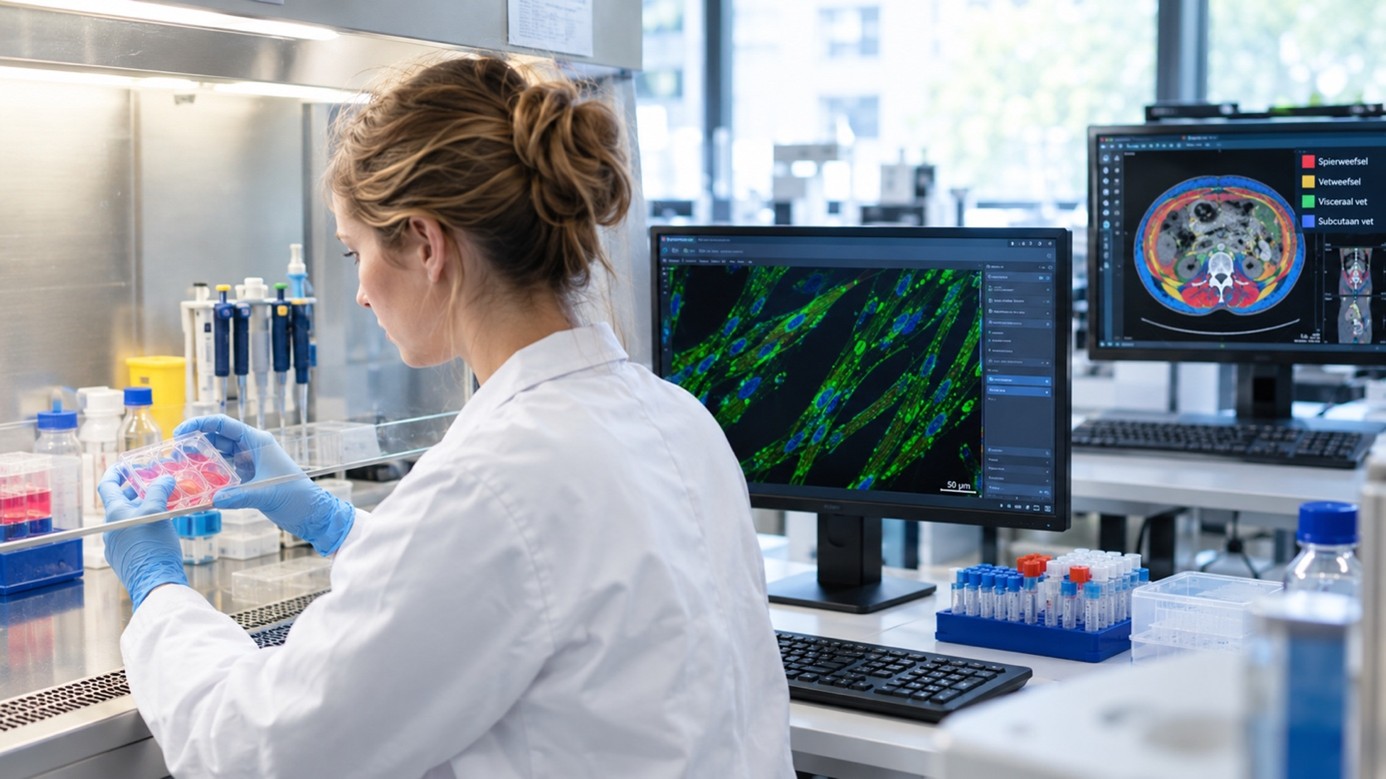
Our team utilizes routine preoperative diagnostics -such as abdominal CT scans and blood tests- and functional performance tests to assess body composition, nutritional status, physical fitness, and inflammation in patients. This information is then linked to cell models that are established from resected tumor and muscle tissue to generate a unique resource for translational cachexia research. Using these approaches, we demonstrated that increased fat content in skeletal muscle (myosteatosis) is a strong predictor of poor survival that is directly caused by factors secreted from the tumor cells from cachectic patients.
Because cancer cachexia presents with a wide range of symptoms and severities, a one-size-fits-all approach is not effective. Our work focuses on personalizing research approaches and multimodal treatment strategies that may include nutritional support, anti-inflammatory medication or immunonutrition, and tailored exercise programs. Such a comprehensive approach aims to address the heterogeneity of cachexia observed in the clinic and the unique needs of each patient, ultimately improving quality of life and survival outcomes. Through this combination of patient-driven research and technological innovation, we are redefining how cancer cachexia is studied and managed.